What we learned at ISE: Separating momentum from reality in modern production
Momentum meets reality in live production
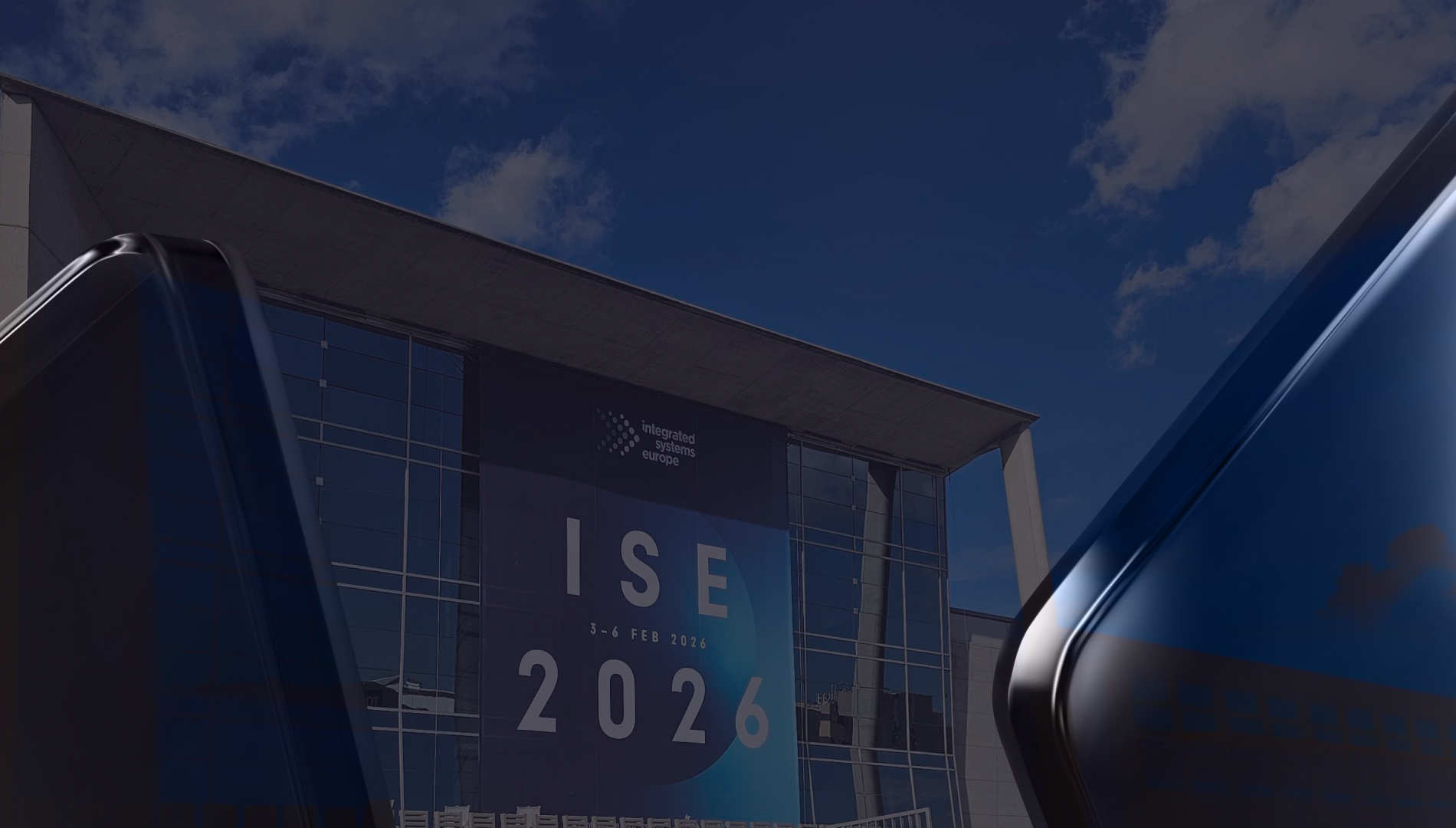
ISE Barcelona continues to be a useful barometer for where the broadcast and live production industry is actually heading, not just where it says it’s going. Walking the show floor, sitting in on sessions and having conversations across the ecosystem, a few consistent themes emerged.
What stood out most was not radical disruption, but consolidation. Many of the big questions around cloud, AI, remote production and monetisation are no longer theoretical. The industry has largely accepted the direction of travel. What’s being worked through now is how these approaches function in the real world, under live conditions, commercial pressure and operational constraints.
Below are the themes that came up repeatedly, and what they tell us about the state of play.
1. Cloud and virtualised production: Ambition meets operational reality
Cloud production is no longer framed as a future aspiration. At ISE, it was treated as an established part of the conversation. However, the nuance lies in how organisations are adopting it.
What’s happening in practice
- A growing proportion of teams are using cloud or virtualised workflows in some capacity, but very few are all-in.
- Hybrid models dominate, with cloud used for live clipping, highlights, secondary feeds and distribution, while core production often remains anchored to on-prem infrastructure.
- Sports and digital-first teams are leading adoption, driven by the need to produce more content, in more formats, with fewer people.
- Corporate events and education are also moving quickly, often because cloud tools align well with smaller crews and tighter timelines.
What’s slowing things down
- Reliability concerns still surface, particularly for tier-one live broadcasts.
- Commercial models can feel opaque, making long-term cost comparisons difficult.
- Internal processes and legacy thinking often lag behind technical capability.
Why this matters
The market has moved beyond debating whether cloud works. The focus is now on flexibility. Platforms that support incremental adoption, rather than forcing wholesale change, feel better aligned with how production teams actually operate today.
2. Live IP and network infrastructure: hybrid is no longer optional
Networking conversations at ISE reflected a maturing market. The question is no longer which standard will “win”, but how multiple approaches coexist.
What’s underpinning live workflows
- Standards like SRT, NDI and ST 2110 remain central to live contribution and distribution.
- Rather than standardising on one protocol, teams are mixing and matching based on geography, bandwidth and production needs.
Designing for mixed environments
- Most vendors now assume production will span on-prem hardware, remote operators and cloud services.
- There is a clear push to abstract network complexity away from operators wherever possible.
Growing interest in managed connectivity
- Managed and orchestrated connectivity is gaining attention, particularly for remote and distributed productions.
- Anything that reduces setup time and risk on event days is viewed positively.
Why this matters
Hybrid networking is now the default assumption. Solutions that reduce friction, hide complexity and support resilient workflows across environments are becoming increasingly valuable.
3. AI and automation: less spectacle, more substance
The conversation around AI at ISE showed that it has matured noticeably. The emphasis has shifted away from novelty and towards practicality.
What customers are prioritising
- Real-time captions, transcription and metadata generation.
- Faster identification of key moments for highlights and clips.
- Automation that removes repetitive tasks during live production.
Production-readiness is the differentiator
- Vendors are more cautious about positioning AI as “fully autonomous”.
- Reliability under live conditions is the benchmark, not how impressive a demo looks.
Why this matters
AI is being evaluated on its ability to save time, reduce pressure and integrate cleanly into existing workflows. The winners will be those who treat AI as an operational layer, not a headline feature.
4. Remote and distributed production: the new normal, with new expectations
Remote production is no longer framed as a workaround or cost-saving measure. It is simply how many teams operate day-to-day.
What teams expect by default
- Remote camera control, talkback, tally and monitoring are table stakes.
- Operators expect to collaborate seamlessly across locations, often with mixed levels of technical expertise.
Key challenges that remain
- Managing latency across distributed crews.
- Ensuring consistency and confidence when productions scale or change at short notice.
Browser-based momentum
- There is growing preference for browser-based tools, particularly for digital and social teams.
- Lower setup friction and faster onboarding are becoming critical differentiators.
Why this matters
As crew models become more fluid, accessibility matters as much as capability. Tools that are easy to access, quick to learn and dependable under pressure stand out.
5. Monetisation, ad insertion and rights: complexity still holding teams back
Commercial conversations were present throughout ISE, but often centred on challenges rather than polished solutions.
How monetisation is happening today
- A mix of dynamic ad insertion, sponsorship overlays and platform-native monetisation tools.
- Many workflows remain fragmented, with manual steps and external dependencies.
Persistent pain points
- Ad insertion into live streams remains technically and operationally complex.
- Rights management and regional restrictions continue to add friction, particularly for global distribution.
Demand for better insight
- Teams are asking for clearer analytics around engagement and revenue.
- Understanding what content drives value is becoming as important as reach.
Why this matters
The easier it is to publish, adapt and measure live content, the more willing teams are to experiment with new revenue models. Complexity remains a barrier to innovation.
6. Vertical and short-form workflows: demand is clear, maturity is mixed
Vertical video and short-form content surfaced more often than in previous years, but with varying levels of intent.
What stood out
- Vertical and short-form workflows are clearly rising up the priority list, even if they are not yet fully realised in most production stacks.
- In many cases, vertical is still discussed as an adaptation of existing horizontal workflows, rather than something designed for natively from the outset.
- There is growing recognition that social and mobile outputs need to be planned earlier in the production process, not treated as an afterthought.
Speed remains critical
- Live clipping and rapid highlights are central to social strategies.
- Teams value workflows that move from live moment to published clip with minimal delay.
Why this matters
The shift towards mobile-first consumption is well understood. What’s now coming into focus is the operational gap between that understanding and the tools teams are using day to day. As vertical and short-form become default outputs rather than experimental formats, workflows that support them natively will increasingly be seen as essential, not optional.
Final takeaway
ISE Barcelona reinforced that the industry is moving through a pragmatic middle phase. Cloud, AI and remote production are established directions, but adoption is shaped by real-world constraints.
The most compelling solutions are not those promising radical change overnight, but those that fit naturally into how teams already work, while quietly removing friction and complexity along the way.