
March Madness 2025: charting the changing media & NIL landscape
The “Moneyball moment” for March Madness?
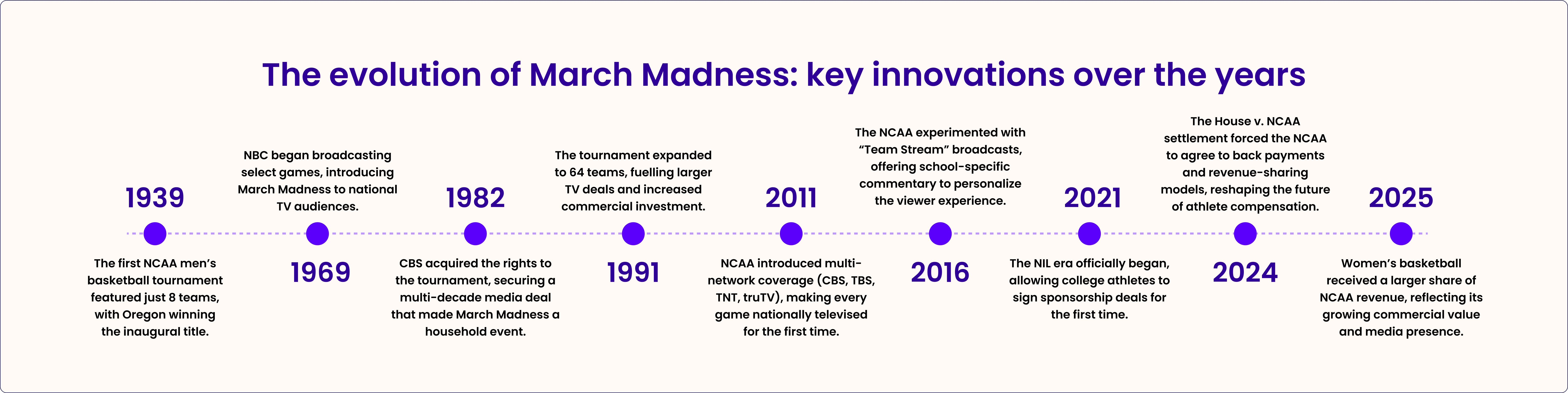
March Madness has always been one of the biggest spectacles in sports, drawing millions of fans and generating over $1billion in revenue. But 2025 represents a pivotal moment in NCAA history, where the tournament is no longer just about basketball, it’s about a fundamental shift in college sports monetization.
With new NCAA policies allowing schools to facilitate Name, Image and Likeness (NIL) deals, the introduction of revenue-sharing models, and evolving gender equity regulations (Title IX compliance), this year’s tournament is ushering in a new era of sponsorships, media rights, and digital engagement.
For brands, rights holders, and digital media teams, March Madness 2025 is more than a sporting event, it’s a commercial battleground where success depends on adaptability, innovation, and real-time engagement strategies. Embracing this shift unlocks unparalleled revenue opportunities, while resisting it means risking obsolescence.
How this year’s March Madness will be different
While full-scale NIL revenue-sharing starts later this year, 2025’s tournament already reflects the shifting power dynamics in college sports. Brands, broadcasters, and schools must adjust to new realities in athlete compensation, sponsorship deals, and digital engagement strategies.
1. NCAA’s landmark settlement and the road to revenue sharing
One of the biggest game-changers is the fallout from the House v. NCAA case, which resulted in a $2.8 billion settlement for athletes who competed between 2016 and 2024.
While the revenue-sharing model won’t officially launch until August, its implications are already shaping brand activations, media rights deals, and NIL negotiations. Colleges are preparing for direct athlete compensation, and brands are re-evaluating their approach to NIL sponsorships to ensure they’re aligned with future NCAA regulations.
At the same time, Title IX compliance presents a new layer of complexity. Colleges and sponsors must ensure equitable NIL fund distribution between men’s and women’s sports, making gender balance a key consideration in sponsorship deals.
💡 Takeaway for brands and digital teams: Aligning NIL partnerships with gender equity policies isn’t just about compliance – it’s crucial for maintaining NCAA approval, brand reputation, and consumer trust.
2. Schools as NIL marketplaces: a new era for sponsorships
A significant policy shift in August 2024 allowed universities to actively assist athletes in securing NIL deals, fundamentally changing the relationship between schools, brands, and athletes.
While this shift won’t fully reshape sponsorship structures until later this year, schools are already adapting by:
Building in-house NIL programs to connect athletes with sponsorship opportunities.
Investing in digital content creation to facilitate athlete-brand collaborations.
Exploring compliance frameworks to ensure alignment with the revenue-sharing model.
As a result, March Madness 2025 will offer the first glimpse into how these school-led NIL deals will evolve, giving brands a preview of what’s to come.
💡 What this means for brands and digital teams: Schools are no longer just institutions, they’re becoming NIL facilitators. College-run NIL programs that collaborate with brands now will gain first-mover advantages in structuring partnerships that scale post-August.
3. The commercialization of women’s basketball
Women’s basketball has never been more commercially viable. The success of Caitlin Clark, Angel Reese, and other stars has fueled record-breaking viewership and engagement, particularly across TikTok, Instagram, and YouTube.
In response, the NCAA’s upcoming revenue-sharing model has been structured to allocate direct payouts to women’s teams, ensuring increased financial investment in the sport.
While these payments aren’t in effect yet, this year’s tournament will serve as a testing ground for new NIL sponsorships, digital-first storytelling, and increased brand investment in women’s sports.
💡 What this means for brands and digital teams: Waiting to invest in women’s sports isn’t an option, the audience is already there. Expect social-driven NIL deals featuring female athletes to dominate brand campaigns and sponsorship activations.
Strategic insights for digital and commercial teams
With the biggest NIL transformation in history just months away, brands and digital teams need to start making fundamental shifts in their approach now to remain competitive in the new era of college sports monetization. Building NIL partnerships that will scale post-August should be a top priority, while compliance with Title IX regulations will dictate how brands allocate sponsorship funds. Ensuring that NIL activations are gender-balanced will be critical, and brands that invest in both men’s and women’s sports early will gain a significant advantage as equity regulations tighten.
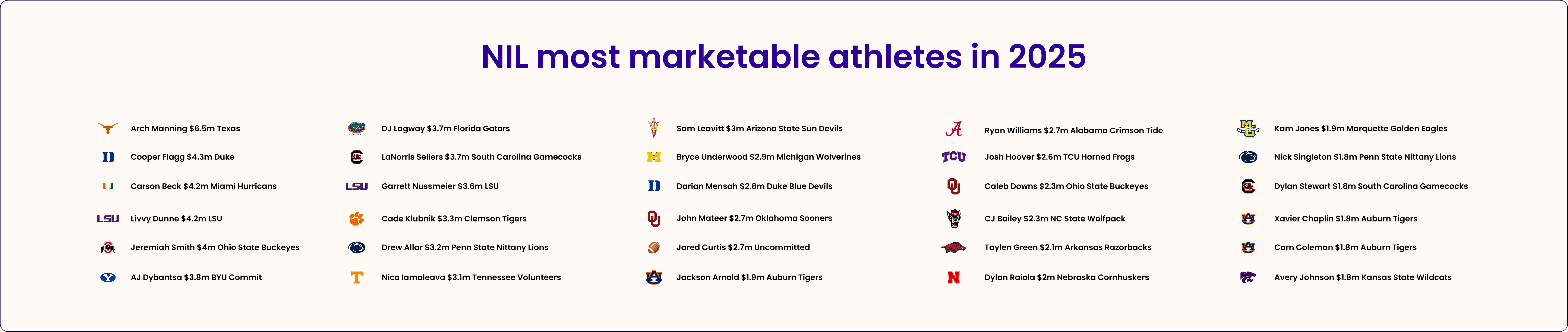
Real-time engagement and interactive content must be at the core of NIL strategies, as March Madness is a moment-driven event. Digital and commercial teams need to move beyond traditional sponsorships and embrace gamified activations, live Q&As, and athlete-led takeovers, ensuring content is optimized for quick social sharing and audience participation. With younger audiences consuming sports across TikTok, Instagram Reels, YouTube Shorts, and live-streaming platforms, relying solely on traditional TV sponsorships is no longer enough. At the same time, to attract the growing pool of brands eager to invest in NIL, digital and commercial teams at schools must take an active role in facilitating these deals.
Furthermore, for digital and commercial teams at colleges, prioritizing content creation and athlete-led storytelling is no longer just about securing brand partnerships, it’s also key to attracting top athletic talent. As student-athletes increasingly become influencers in their own right, they are looking for programs that will support their personal brand growth and maximize their NIL potential. By investing in digital production capabilities, schools can help athletes create high-quality, engaging content that enhances their visibility, strengthens their marketability, and attracts sponsors. This not only benefits current NIL activations but also positions the university as a leader in athlete branding and digital engagement.
💡 Leveraging content from live games…instantly: With Grabyo’s real-time content distribution and native integrations (Greenfly, Sociale, and more), athletes can receive highlights immediately post-game to share on their social channels maximizing their NIL value in the moment. By giving student-athletes instant access to their best plays, schools and brands can enhance visibility, drive engagement, and increase sponsorship opportunities, ensuring that every game moment translates into NIL revenue.
The cost of ignorance
For brands, broadcasters, and media teams, waiting until August to act on these shifts in the NCAA landscape comes at a high price. Digital teams that fail to integrate NIL-driven content into their programming risk declining viewership and lost ad revenue as audiences increasingly engage with athlete-led digital content on social platforms. With 46% of Gen Z sports fans watching live events based on the athletes they follow, not team loyalty, integrating NIL content is no longer optional, but essential. The media landscape now prioritizes real-time, player-driven storytelling, and those who fail to adapt will struggle to stay relevant.
Similarly, those that hesitate to invest in women’s sports will find themselves at a disadvantage in one of the fastest-growing commercial markets in sports. The momentum behind women’s basketball is undeniable, and early adopters will benefit from increased exposure, audience loyalty, and sponsorship ROI. Those who wait risk being overshadowed by competitors who recognize the value and commercial potential of this expanding market.
For schools and digital teams, the challenge lies in infrastructure and adaptability. As NIL deals become more integrated into college sports, teams without scalable, cloud-based production tools will struggle to meet the demand for real-time content. The expectation for instant highlights, athlete-driven sponsorship activations, and dynamic engagement will only grow, and those without the right technology in place will be left behind.
March Madness 2025 isn’t just a tournament, it marks the start of a new era of college sports sponsorships and digital media. The industry is moving fast, and those who fail to evolve now will find themselves scrambling to catch up when the new rules take full effect.
💡 March Madness in the spotlight: March Madness 2025 isn’t just a tournament, it’s a preview of the future of college sports sponsorships.
How Grabyo helps digital teams win in the NIL era
As NIL changes reshape college sports, brands, broadcasters, and digital teams need agile, scalable solutions to keep up with the demand for real-time athlete-driven content. The shift toward athlete-led sponsorships and multi-platform content distribution requires speed, flexibility, and efficiency, all of which can be seamlessly managed in the cloud.
Grabyo’s cloud-based production tools provide the infrastructure needed to manage NIL activations at scale, allowing brands and broadcasters to create, edit, and distribute NIL-backed content instantly, whether it’s a highlight clip with an athlete’s sponsored branding, a real-time social post, or an interactive livestream featuring an NIL partner.
Unlike traditional production workflows that are costly, slow, and reliant on physical infrastructure, Grabyo’s cloud-based platform eliminates bottlenecks and allows for real-time content delivery across multiple channels. Athlete-led sponsorship activations can be executed with speed and precision, ensuring brands maximize every moment of engagement.
With automated content clipping, remote collaboration capabilities, and seamless integration across social, digital, and broadcast platforms, Grabyo allows digital teams to:
🌎 Publish NIL-driven content instantly across multiple platforms.
💰 Automate athlete-led storytelling & sponsorship activations.
📈 Scale video production without expensive infrastructure.
🤝 Ensure compliance & gender equity in NIL sponsorships.
With real-time content workflows, automated highlight clipping, and seamless multi-platform distribution, Grabyo enables brands and broadcasters to thrive in the NIL era of college sports, before, during, and after August 2025.
Supporting NIL for student-athletes
Attracting student athletes to colleges now involves offering help to build their brands. With changes to NIL rights, USF wanted a way to bolster their offering.
Grabyo’s integration with INFLCR, the leading content and compliance software platform for elite athletics, allows USF’s digital team to provide real-time match highlights directly to its athletes so they can post this content in real-time.
Thanks to Grabyo’s intuitive UI and dynamic video creation capabilities, the process of delivering clips is as efficient and creative as possible, giving student-athletes the tools they need to leverage their NIL.
Final thoughts: navigating the future of NIL in college sports
The NIL era is accelerating, and March Madness 2025 will be a key indicator of what’s to come. While full-scale revenue sharing and school-facilitated NIL deals won’t take full effect until August, this tournament will provide early insights into how brands, broadcasters, and digital teams must adapt to the evolving NCAA landscape.
For brands, this is the moment to test and refine NIL-driven strategies before the financial and regulatory landscape shifts later this year. Those who embrace multi-platform engagement, real-time content, and athlete-led storytelling now will be in prime position to capitalize once these changes are fully implemented.
For those who fail to adapt? The industry won’t wait for them to catch up.